 Reviews
An LG refrigerator not cooling often comes down to one of four things you can check yourself: demo mode (the display reads OFF), a temperature set too warm, food blocking the rear air vents, or poor airflow around the cabinet. If those are fine, the fault is usually an evaporator fan, a frosted-over evaporator, a temperature sensor or the compressor. This guide goes through LG’s own checks first, then the parts a technician tests, then the cost.
Quick diagnosis
- Display shows OFF, nothing is cold: demo (display) mode. A setting, fixed from the control panel.
- Fridge a little warm, freezer fine: setting too high, vents blocked or the fridge is packed too full.
- Fridge warm, freezer still freezing: evaporator fan, frost blocking the air path, or the damper that feeds the fridge section.
- Both sections warm, you can hear it running: condenser airflow or a sealed-system fault such as the compressor.
- Stopped cooling after an outage: give it time, then power-cycle it. A dead or erratic panel after a storm points to the control board.
Triage
- Stop using it now: a burning smell, a hot or buzzing plug, a breaker that keeps tripping, or water pooling near the outlet. Unplug it if you can reach the plug safely.
- Book a technician: the freezer is warming too, the back wall of the freezer is covered in frost, the compressor clicks on and off, or the settings are right and the fridge is still above 40°F after a day.
- Safe to check yourself: demo mode, the temperature setting, vents and loading, door seals, clearance and dust on the back cover, and a power reset.
LG refrigerator not cooling: symptom checker
| What you notice | Most likely cause | Who fixes it |
|---|---|---|
| OFF on the display, lights work, no cooling at all | Demo or display mode | You: button sequence below |
| Display reads 41°F or higher | Temperature set too warm | You: set 34 to 37°F |
| Warm at the front, cold at the back, shelves packed | Blocked vents or overfilling | You: rearrange |
| Fridge warm, freezer cold, no fan sound with the door switch pressed | Evaporator fan motor | Technician |
| Fridge warm, freezer cold, frost on the freezer’s back panel | Defrost system failure | Technician |
| Both sections warm, cabinet sides or back very hot | Dusty back cover, no clearance, or condenser fan | You first, then a technician |
| Both sections warm, compressor runs or clicks, nothing gets cold | Compressor or sealed system | Technician |
Check these first (no tools)
Before you touch anything
- Unplug the refrigerator before you vacuum behind it or move it. Have a second person help roll it out so the water line doesn’t kink.
- Don’t remove the back cover. LG warns that it exposes electrical components and refrigerant tubing.
- Don’t chip at frost with a knife or screwdriver. A punctured evaporator ends the life of the refrigerator.
- Look for OFF on the display. LG says OFF means the unit is in demo mode, which disables all cooling in both sections while the lights and display stay on. On 2018 and older models, open the right refrigerator door and hold the Refrigerator and Ice Plus buttons together for five seconds. On 2019 and newer models (the serial number starts with 901 or higher), hold both buttons, then keep holding Refrigerator and press Ice Plus three times. The panel beeps and shows the temperatures again.
- Check the set temperature. LG’s guidance is to set the refrigerator section between 34°F and 37°F, and it notes that a display set to 41°F or 43°F will not feel cold enough. If the panel doesn’t respond, the control lock is on: hold the Lock button for three seconds, then adjust.
- Clear the vents and thin out the shelves. Cold air enters the fridge section through vents on the back wall. A milk jug or a tray pushed against them starves the whole compartment. LG recommends keeping the refrigerator no more than 70% full.
- Check that every door and drawer closes. A shelf installed crooked, a tall bottle in the door bin or a freezer drawer stopped by a bag of ice lets warm, damp air in. Close each door and look along the gasket for a gap.
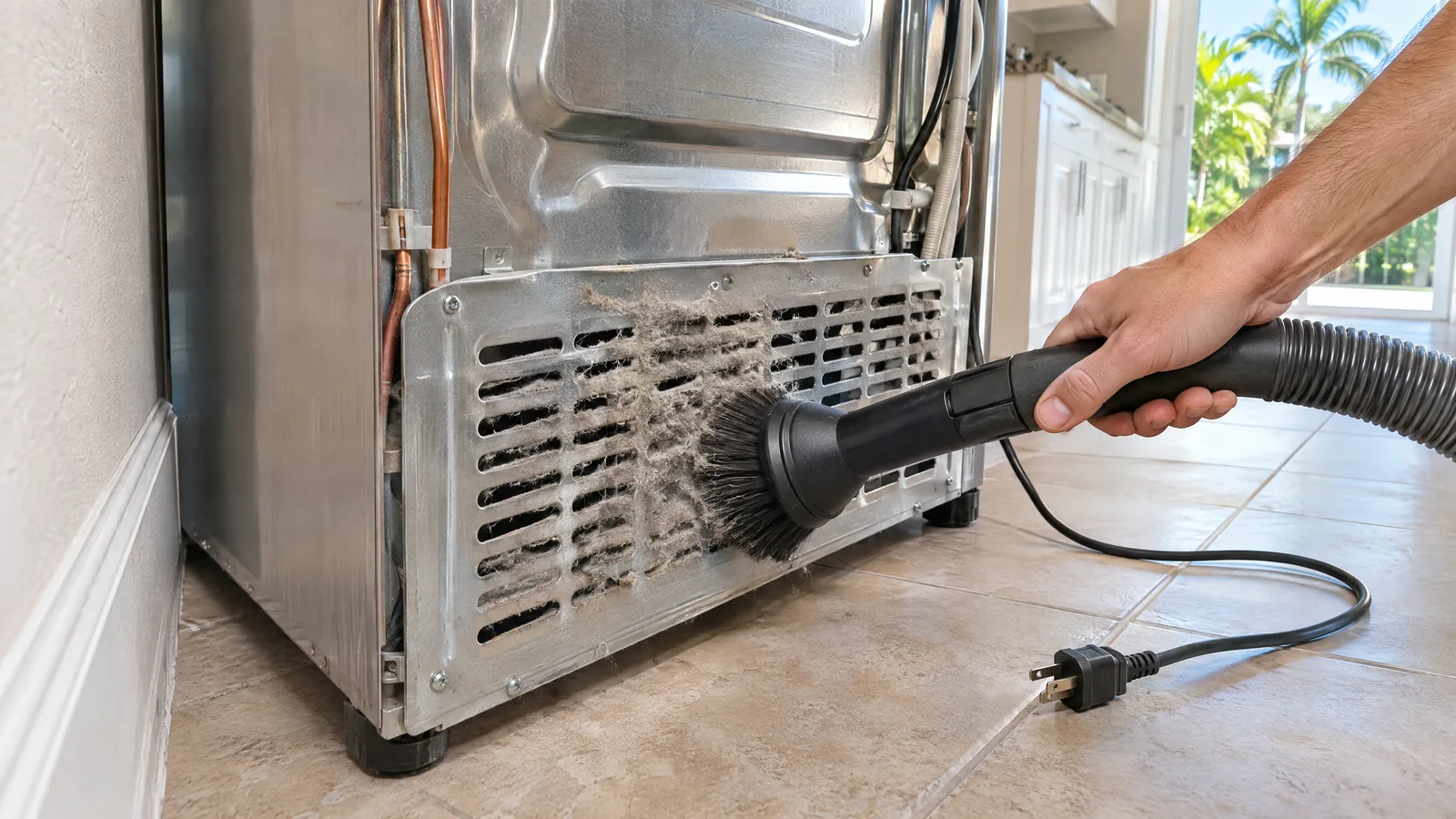
- Give it room and remove the dust. LG asks for at least 4 inches of space between the refrigerator and the wall and a room temperature between 41°F and 109°F. Unplug the refrigerator and vacuum the dust from the outside of the back cover.
- Power-cycle it. Unplug it or switch off its breaker, wait 10 seconds and restore power. That is the reset LG gives for an OFF display that appeared by accident, for example after the panel was wiped with a wet cloth.
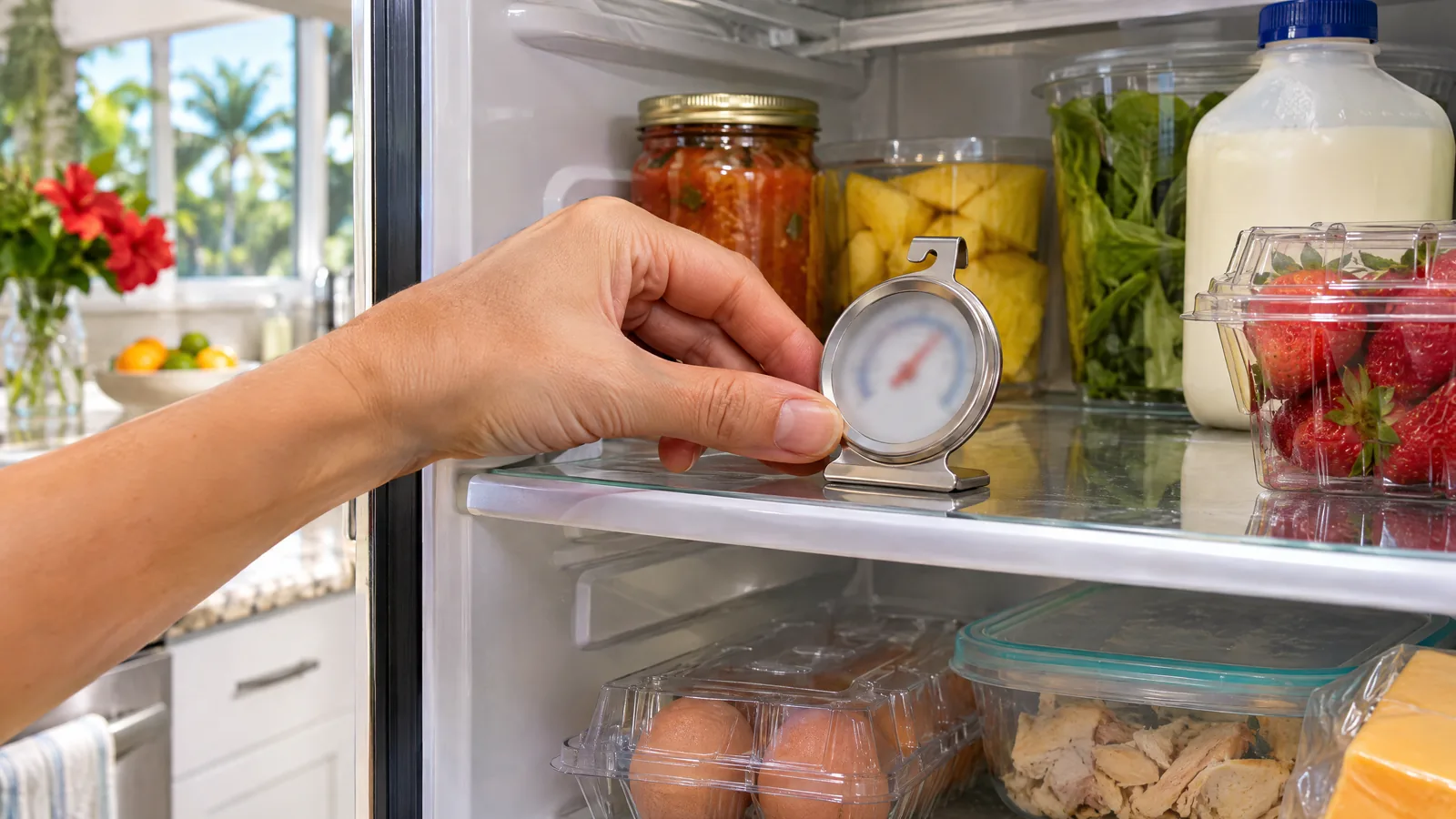
- Then wait and measure. Put an appliance thermometer on the middle shelf. After a change in settings, a reset or a big grocery load, give it a day before judging. A newly installed or repaired LG can take two to three days to settle, according to LG.
If the thermometer still reads above 40°F a day later with the settings right and the vents clear, the cause is a part, not a setting. That’s the point to book a refrigerator repair. Our guide to what temperature a refrigerator should be explains how to take a reading you can trust.
Why is my LG refrigerator not cooling but the freezer is working?
A cold freezer with a warm fridge means the sealed system is making cold and the cold isn’t reaching the fresh-food section. In most LG French-door and side-by-side models the fridge is cooled by air moved from the evaporator by a fan, so the suspects are the fan, frost blocking the air path, or the damper and duct that feed the fridge.
This is a common pattern, and it is usually a moderate repair, not the end of the refrigerator. The next section explains how each part is told apart.
The diagnosis: parts that stop an LG refrigerator from cooling
1. Evaporator fan motor
The evaporator fan pushes cold air off the coil and through the compartments. When it stops, the coil stays cold but the air around your food doesn’t move.
How a technician confirms it: with the door switch held in, there is no fan sound and no air from the vents, or the fan chirps and stalls. Before replacing the motor, the technician checks whether ice has built up around the blade, because a fan stopped by ice is a defrost problem, not a motor problem.
2. Defrost system failure
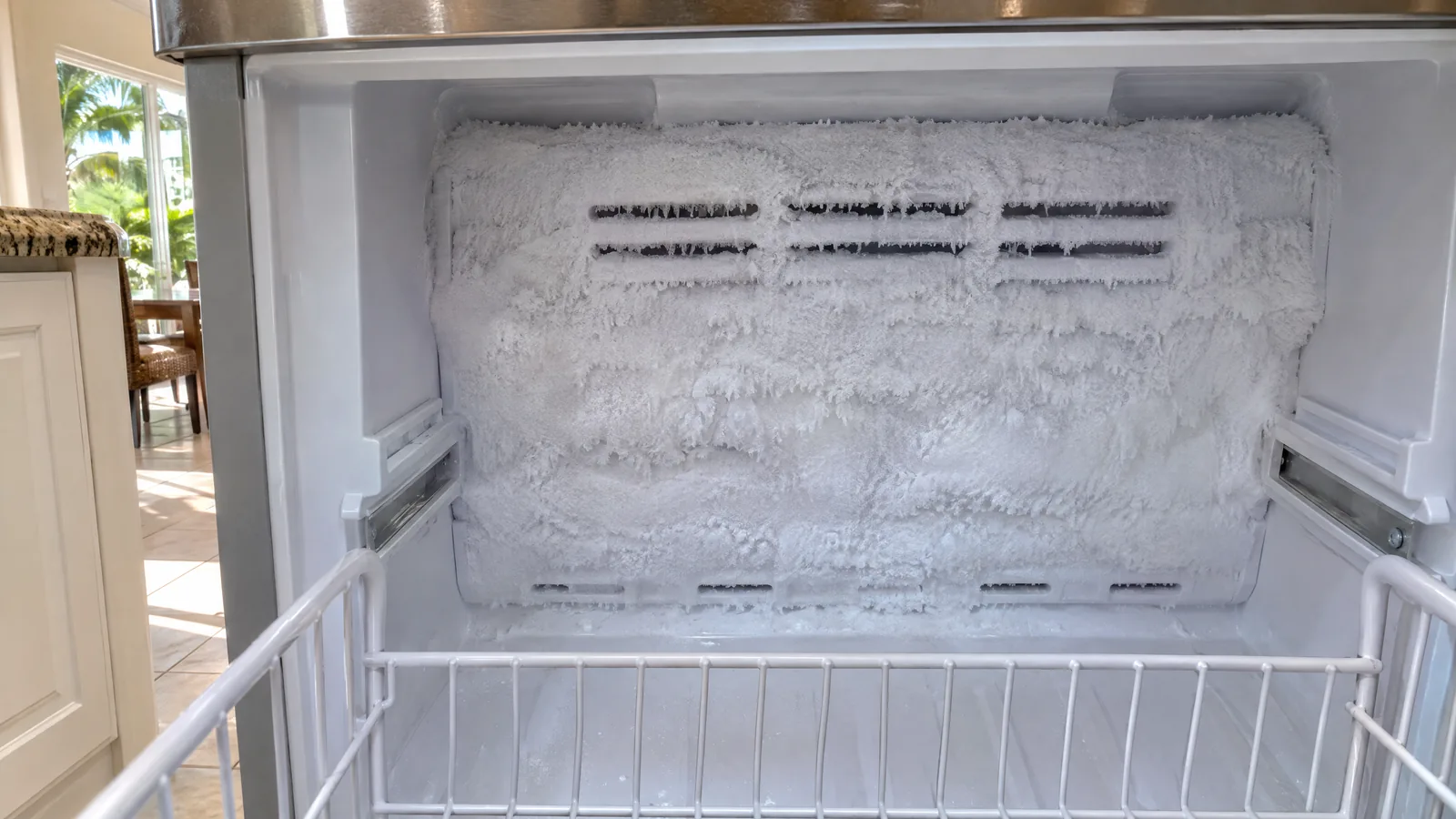
The evaporator frosts up in normal use and a heater melts that frost on a regular cycle. If the heater, its sensor or the control that runs it fails, frost packs the coil solid and air can’t pass through it. The fridge warms first, and the freezer follows.
How a technician confirms it: a blanket of white frost across the freezer’s inside back panel, weak airflow, and a heater or defrost sensor that tests out of range. Emptying the refrigerator and leaving it unplugged with the doors open for a day clears the frost and restores cooling for a while, which confirms the diagnosis but doesn’t fix the failed part.
3. Damper or air duct
A motorized door called a damper meters cold air into the fresh-food section. If it sticks closed or its duct ices over, the freezer stays at temperature while the fridge climbs.
How a technician confirms it: the evaporator fan runs and the coil is clear, but little or no air comes out of the fridge vents. The damper is tested through the control’s service mode and inspected for ice.
4. Temperature sensor
Small sensors called thermistors tell the control board how cold each section is. A sensor that reads colder than the truth makes the board stop cooling early.
How a technician confirms it: the displayed temperature and a thermometer disagree by several degrees, and the sensor’s resistance doesn’t match the service chart for that temperature.
5. Condenser fan and airflow
The condenser gets rid of the heat pulled out of the cabinet. With a failed condenser fan, a dust-matted back cover or no space behind the unit, that heat has nowhere to go and both sections warm up, worst on hot afternoons.
How a technician confirms it: the compressor area is very hot, the fan near it isn’t turning, and cooling improves when airflow is restored.
6. Compressor or sealed system
If the fans run, the coil is clear and neither section gets cold, the problem is in the sealed system: the compressor, a restriction or a refrigerant leak. Signs include a compressor that runs constantly without cooling, or one that clicks on and off every few minutes.
How a technician confirms it: by measuring compressor current and the temperatures along the refrigerant lines. Sealed-system work needs recovery equipment and a refrigerant certification, so it is never a homeowner repair. Before you approve it, read your LG warranty: many LG models carry longer parts coverage on the compressor than on the other components, and the terms differ by model and year.
7. Control board
The main board switches the compressor, fans and defrost heater. Board failures show up as a dead or flickering display, parts that never get told to run, or odd behavior that began right after a power event.
How a technician confirms it: the board is given the command to run a part and no voltage leaves it, while the part itself tests good.
Does Florida heat or a power outage change the diagnosis?
Yes, in two ways. Heat and humidity make marginal problems show sooner, and storm outages add a cause that drier, calmer states see less often: surge damage to the control board.
Garage and lanai refrigerators. LG’s stated room range tops out at 109°F. A second refrigerator in a closed garage works near that limit through a Florida summer, and humid air entering at every door opening turns into frost on the evaporator. A garage fridge that struggles in August and recovers in January often has no failed part.
After an outage. Ready.gov says a closed refrigerator keeps food cold for about four hours and a full freezer holds its temperature for about 48 hours, and that food should be thrown out once it reaches 40°F or higher. It also warns that power can return with momentary surges or spikes, which is why it advises disconnecting appliances during an outage. The Atlantic hurricane season runs from June 1 to November 30, so this comes up every year in Tampa Bay, Orlando, Jacksonville and Sarasota.
When power returns, LG says cold air starts circulating one to two hours after the refrigerator is powered, and a full recovery takes longer with a full load. If the display is blank or scrambled, or the fridge is silent after several hours, power-cycle it once. If that changes nothing, the board needs testing.
Prognosis: what the repair costs, and when to replace
Appliance Doctor Pro doesn’t publish a price list, because the price depends on the part and the model. The technician diagnoses the refrigerator, explains the repair and gives you the cost before any work starts. These national ranges from two consumer cost guides, checked in November 2026, show the scale.
| Repair | HomeGuide | Fixr |
|---|---|---|
| Typical refrigerator repair | $125 to $500 | $350 to $500 (average $400) |
| Coil cleaning | $70 to $130 | $60 to $100 |
| Evaporator fan motor | $250 to $400 | $120 to $200 (fan) |
| Defrost heater | $120 to $400 | Not listed |
| Control board | $400 to $750 | $500 to $1,000 |
| Compressor | $700 to $1,250 | $500 to $1,000 |
| Sealed system | $600 to $1,400 | $800 to $1,200 |
Sources: HomeGuide refrigerator repair cost and Fixr refrigerator repair cost. Prices vary by model, part and market.
Prognosis: repair or replace?
- Repair: a fan motor, defrost part, sensor or damper on a refrigerator of almost any age. These are the common causes of a warm fridge with a cold freezer and sit in the lower half of the ranges.
- Check the warranty first: any compressor or sealed-system diagnosis. Manufacturer parts coverage can change the math completely.
- Think it over: a compressor or board repair paid fully out of pocket. HomeGuide’s rule is that a refrigerator is worth repairing when it is under 10 years old and the repair costs less than half of a new unit.
Worked example
A 6-year-old LG French-door refrigerator has a warm fridge and a cold freezer. The diagnosis is a failed defrost heater, quoted at $290. A comparable new refrigerator costs $2,000, so the repair is about 15% of replacement on a unit under 10 years old: repair it. Change the diagnosis to a compressor at $1,100 with no warranty coverage and the repair is 55% of replacement, over the half-price line. That is when replacement, or a careful read of the warranty, makes more sense.
When to call a technician
Call when the free checks are done and the fridge is still above 40°F, when the freezer has started to soften, or when you see frost on the freezer’s back panel. Move perishables to a cooler in the meantime. We repair refrigerators across Tampa Bay, Orlando, Jacksonville and Sarasota, with same-day appointments in most cases, and LG appliance repair is a regular part of that work. If the unit is older and you’re weighing replacement, see how long a refrigerator should last.
Frequently asked questions
How do I reset an LG refrigerator that is not cooling?
There is no reset button for cooling. LG’s reset is a power cycle: unplug the refrigerator or switch off its breaker, wait 10 seconds and restore power. If the display showed OFF, use the demo-mode button sequence instead. A reset clears a confused control; it won’t repair a failed fan, heater or compressor, so measure the temperature a day later.
Why is my LG refrigerator running but not cooling?
If you hear it running and neither section is cold, check for OFF on the display first, then for dust and clearance at the back. Past that, a compressor that runs without cooling points to the sealed system: the compressor itself, a restriction or a refrigerant leak. That needs a technician with gauges and a current meter.
How long does an LG refrigerator take to get cold again?
LG says cold air starts circulating about one to two hours after power is connected and that a new or just-repaired refrigerator can take two to three days to reach its normal temperature, depending on how much food is inside. After a short outage with the doors kept shut, recovery is much faster.
What temperature should an LG refrigerator be set to?
LG recommends 36°F to 37°F for the refrigerator section and suggests setting it between 34°F and 37°F if it isn’t cold enough. For the freezer, LG’s not-cold-enough guidance is -8°F or colder. The FDA’s food-safety line is 40°F or below for the refrigerator and 0°F for the freezer.
Is food safe after my LG refrigerator stopped cooling?
Go by temperature, not smell. Ready.gov says a closed refrigerator keeps food cold for about four hours, and that food should be thrown out if its temperature is 40°F or higher. A thermometer kept on the middle shelf removes the guesswork the next time it happens.
Appliance Doctor Pro
Settings are right and it’s still warm?
A technician will test the fans, defrost system, sensors and compressor, explain what failed and give you the price before any work begins. Repairs carry our 90-day repair warranty, and we’re open 7 days a week.
General information for homeowners. Button names and sequences differ by LG model, so check your owner’s manual, and check your warranty before paying for a sealed-system repair.
Sources
- LG USA Support: If Your LG Refrigerator Is Not Cold Enough
- LG USA Support: How to Disable Demo Mode
- LG USA Support: OFF appears on the display while freezing and refrigeration fail
- LG USA Support: If Your LG Freezer Is Not Cold Enough
- FDA: Are You Storing Food Safely?
- Ready.gov: Power Outages
- National Hurricane Center: Tropical Cyclone Climatology
- HomeGuide: How much does refrigerator repair cost?
- Fixr: Refrigerator repair cost