 Reviews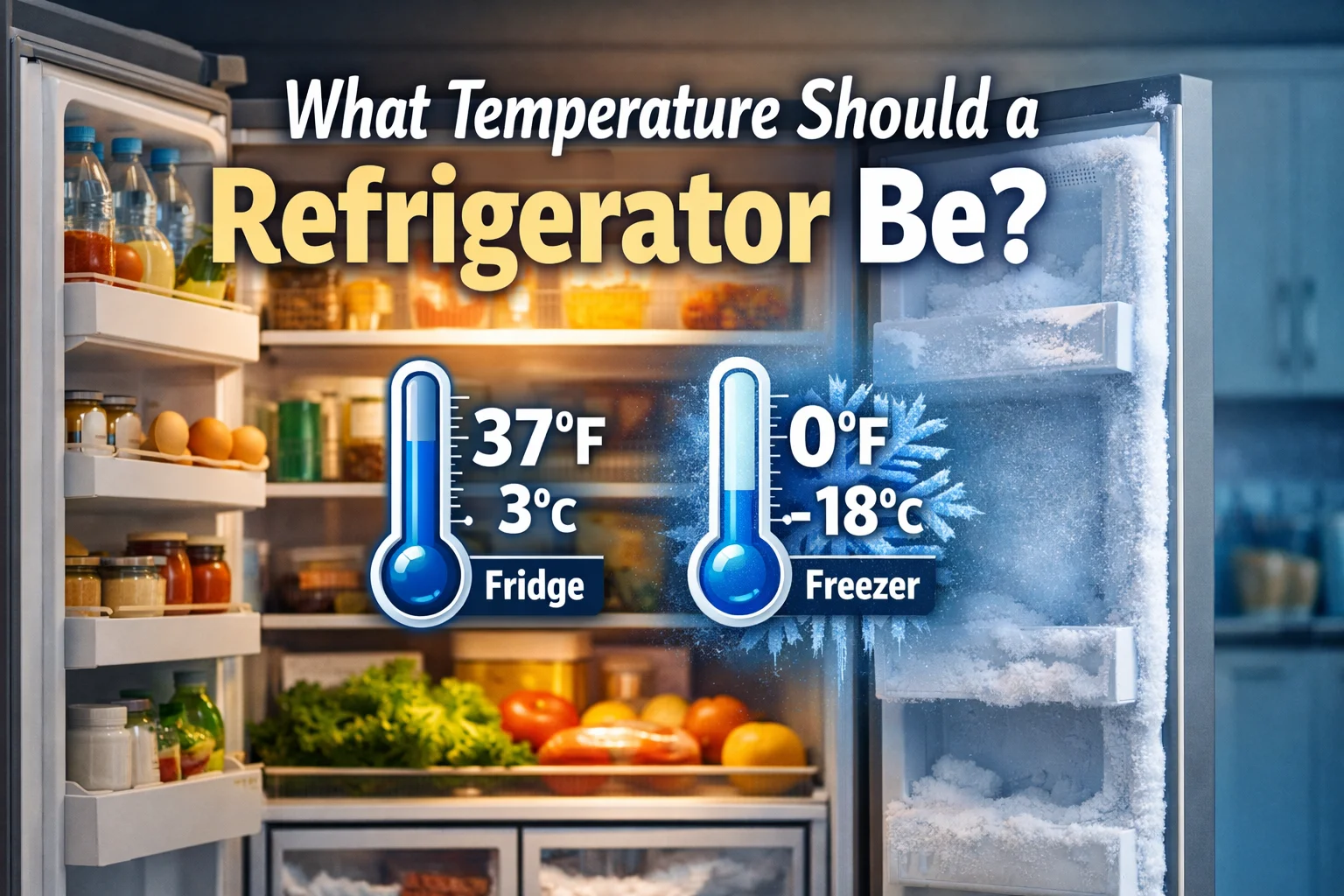
You open your refrigerator expecting fresh food, only to find warm milk, soggy vegetables, or ice cream that feels soft. These problems are frustrating and expensive. Food waste adds up quickly, and a refrigerator that runs too cold or too warm can increase your energy bill without you realizing it.
If you are searching for answers about the correct refrigerator temperature, or trying to figure out why your refrigerator is working but the freezer is not freezing, this guide will help you understand exactly what is happening. You will learn the proper temperature settings, how to test them correctly, what causes temperature problems, and when it is time to schedule professional refrigerator-repair service.
This article is written specifically for homeowners who want clear, practical solutions without technical confusion.
What Temperature Should a Refrigerator Be Set At?
The correct temperature is critical for food safety, appliance efficiency, and long term performance.
Recommended Refrigerator Temperature
Set your refrigerator to 37°F or 3°C.
This temperature keeps food safely below 40°F, which is the point where bacteria begin to grow rapidly.
Recommended Freezer Temperature
Set your freezer to 0°F or minus 18°C.
At this temperature, food remains frozen solid and maintains quality for long term storage.
If your refrigerator does not allow exact temperature control and instead uses a dial from 1 to 5 or 1 to 9, the ideal setting is usually in the middle. However, you should confirm the actual temperature using a thermometer rather than relying only on the control panel.
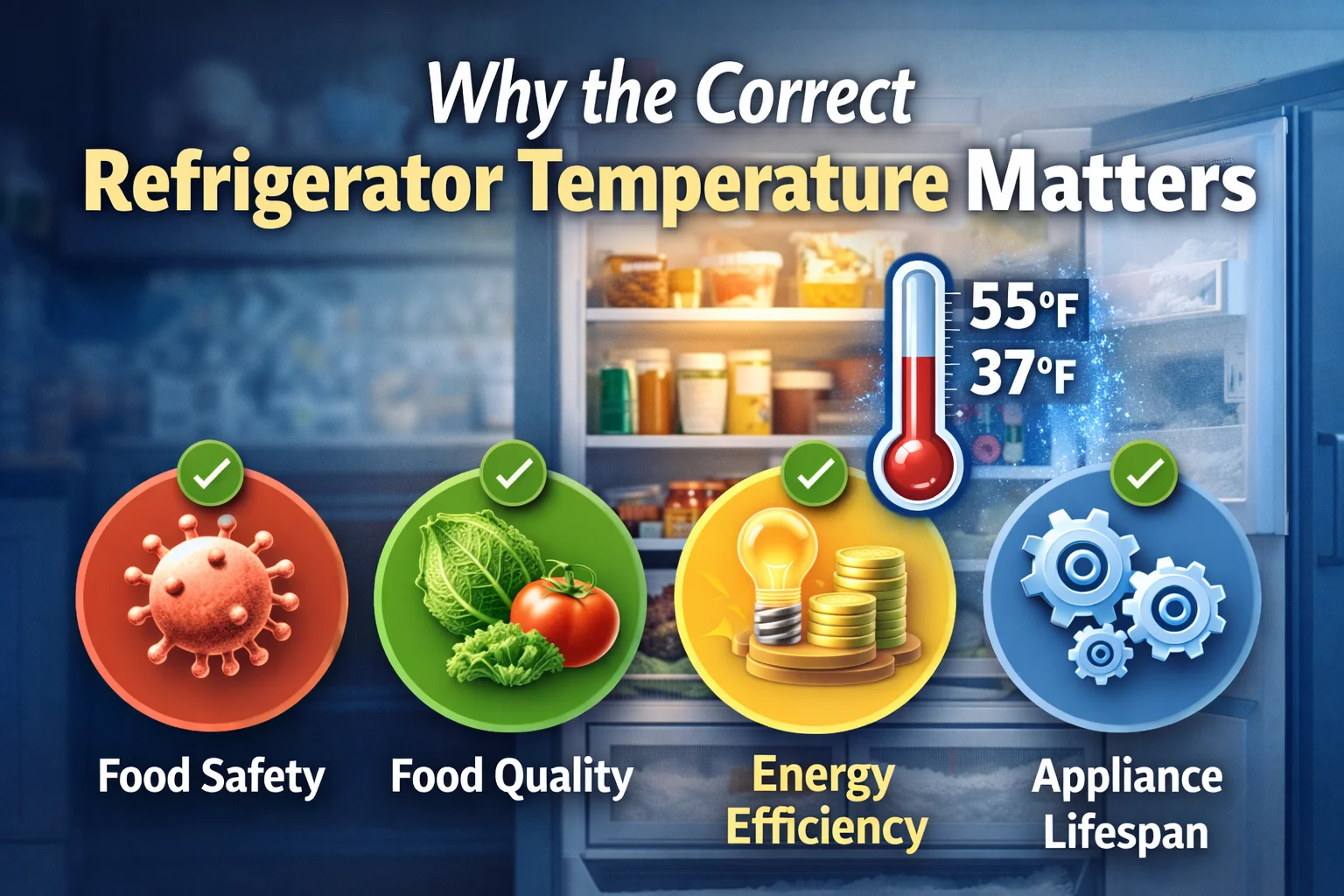
Why the Correct Refrigerator Temperature Matters
Many homeowners underestimate how important proper temperature settings are. Incorrect settings can create multiple issues.
1. Food Safety
Perishable foods such as meat, dairy, eggs, and leftovers must remain below 40°F to prevent bacterial growth. A refrigerator that runs too warm increases the risk of foodborne illness.
2. Food Quality
Even if food does not spoil immediately, incorrect temperatures reduce freshness. Vegetables wilt, dairy spoils faster, and frozen foods develop freezer burn.
3. Energy Efficiency
If your refrigerator is set too cold, the compressor runs longer than necessary. This increases electricity usage and utility bills.
If it is set too warm, the appliance may cycle more frequently to compensate, which also increases wear.
4. Appliance Longevity
Stable temperatures reduce stress on internal components such as the compressor, evaporator fan, thermostat, and control board. When temperatures fluctuate constantly, parts wear out faster.
How to Check Your Refrigerator Temperature Properly
Many refrigerators display the set temperature, but that does not always reflect the true internal temperature. Testing it correctly is simple.
Step 1: Use a Refrigerator Thermometer
Place a thermometer in:
- The center of the middle shelf in the refrigerator
- The center of the freezer compartment
Do not place it in the door, because door temperatures fluctuate frequently.
Step 2: Wait 8 to 24 Hours
Allow the appliance to operate normally before checking the reading.
Step 3: Record the Results
If your refrigerator reads above 40°F, it is too warm.
If it reads below 33°F, it may be too cold.
If your freezer is above 5°F, it is not cold enough.
Adjust the controls gradually and recheck after several hours.
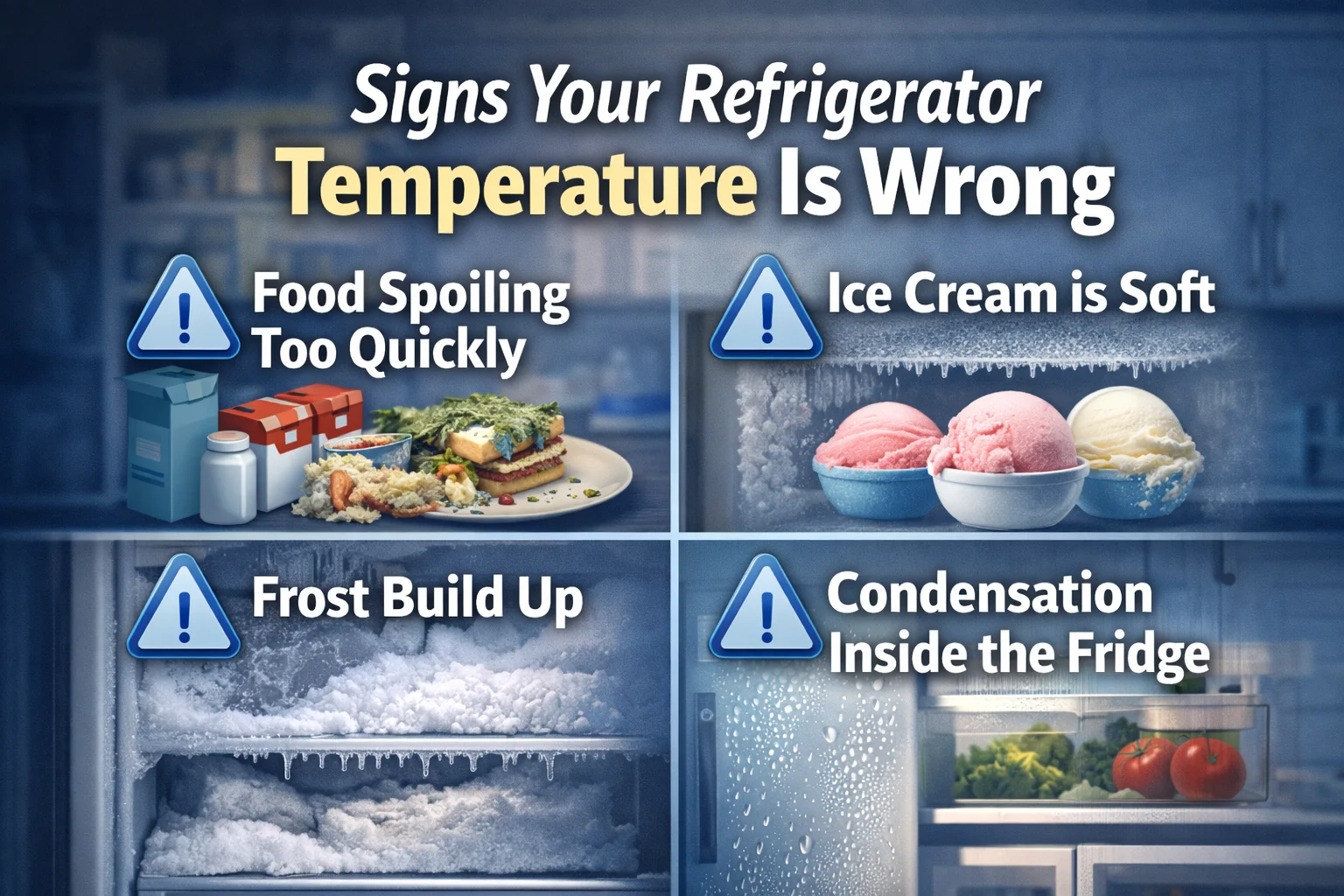
Signs Your Refrigerator Temperature Is Wrong
Temperature problems usually show warning signs before complete failure.
1. Food Spoiling Too Quickly
Milk turning sour within a few days or leftovers going bad early often indicates warm internal temperatures.
2. Ice Cream Is Soft
If ice cream is not firm, your freezer is likely above 0°F.
3. Frost Build Up
Excess frost inside the freezer suggests airflow problems or defrost system failure.
4. Condensation Inside the Fridge
Moisture on shelves or walls may indicate warm air entering through faulty seals or poor cooling.
5. Refrigerator Making Loud Noise
If you notice unusual humming, buzzing, or rattling, it may be related to airflow problems or the compressor working harder than normal. Issues related to refrigerator making loud noise often connect to temperature imbalance.
Why Your Refrigerator Is Working but Freezer Not Freezing
One of the most common homeowner complaints is refrigerator-working-but-freezer-not-freezing. The refrigerator section feels cool, but frozen foods thaw.
This problem usually involves airflow or cooling distribution issues rather than complete system failure.
Common Causes
1. Blocked Air Vents
Cold air flows from the freezer into the refrigerator section. If vents are blocked by food items, airflow becomes restricted, leading to uneven cooling.
2. Frosted Evaporator Coils
When the defrost system fails, ice builds up on the evaporator coils. This blocks airflow and prevents the freezer from reaching proper temperature.
3. Defrost System Malfunction
The defrost heater, thermostat, or control board may fail, causing frost accumulation.
4. Damaged Evaporator Fan Motor
If the fan stops circulating cold air, the freezer temperature rises even though the refrigerator may remain somewhat cool.
5. Thermistor or Sensor Failure
Faulty temperature sensors send incorrect information to the control board, resulting in improper cooling cycles.
If simple steps like clearing vents and resetting controls do not solve the issue, professional refrigerator-repair service is recommended.
Common Causes of Refrigerator Temperature Fluctuations
Temperature instability can happen for several reasons.
Dirty Condenser Coils
Dust buildup reduces heat release from the coils. This forces the compressor to work harder and can cause uneven cooling.
Clean coils every six months using a vacuum or brush attachment.
Faulty Door Seals
Damaged or loose gaskets allow warm air inside. This leads to frequent cycling and inconsistent temperatures.
To test seals, close the door on a dollar bill. If it slides out easily, the gasket may need replacement.
Overloading the Refrigerator
Air must circulate freely inside the compartments. Overpacking blocks vents and disrupts cooling.
Frequent Door Opening
Opening the refrigerator frequently introduces warm air, causing temporary temperature spikes.
Malfunctioning Control Board
Modern refrigerators rely on electronic control boards to regulate cooling cycles. If the board malfunctions, temperature regulation becomes inconsistent.
What to Do If Your Refrigerator Is Making Loud Noise
Strange noises often accompany temperature problems. Addressing them early can prevent major repairs.
Identify the Type of Noise
- Humming or buzzing may indicate compressor strain.
- Clicking sounds may suggest a faulty start relay.
- Rattling could mean loose components or improper leveling.
- Grinding or squealing often points to a failing fan motor.
Basic Troubleshooting Steps
- Ensure the refrigerator is level.
- Remove debris from behind and beneath the appliance.
- Clean condenser coils.
- Check that nothing inside is blocking the fan.
If noise continues, especially alongside cooling problems, professional service is necessary.
How to Remove an Ice Maker from a Samsung Refrigerator
Many homeowners also ask how to remove an ice maker from a samsung refrigerator during troubleshooting.
While steps vary by model, the general process includes:
- Disconnect power.
- Shut off the water supply.
- Remove mounting screws.
- Carefully disconnect wiring harnesses.
Always consult your user manual for your specific model. Incorrect removal can damage components or void warranties.
When to Call for Professional Refrigerator Repair
Some issues can be handled with cleaning and basic adjustments. Others require experienced technicians.
You should consider professional refrigerator-repair service if:
- Your freezer remains above 5°F despite adjustments.
- Your refrigerator-working-but-freezer-not-freezing continues after clearing vents.
- You notice constant compressor operation.
- There is water leakage under the appliance.
- The refrigerator-making-loud-noise/ problem persists.
- Frost buildup returns quickly after defrosting.
At Appliance Doctor Pro, trained technicians diagnose cooling issues accurately and restore proper performance efficiently. Early intervention often prevents expensive part replacements.
Preventive Maintenance Tips for Stable Refrigerator Temperature
Preventive care reduces breakdowns and extends appliance life.
Clean Coils Twice a Year
Dust restricts heat transfer and reduces efficiency.
Keep Proper Airflow
Avoid overloading shelves and blocking vents.
Inspect Door Seals Regularly
Replace worn gaskets promptly.
Allow Hot Food to Cool Before Refrigerating
Placing hot items inside raises internal temperature and stresses the compressor.
Check Temperature Quarterly
Use a thermometer periodically to confirm accurate cooling.
Keep Freezer About 70 to 80 Percent Full
A reasonably full freezer maintains stable temperature better than an empty one.
Final Thoughts
Maintaining the correct refrigerator temperature is one of the simplest ways to protect your food, reduce energy costs, and extend appliance life. Set your refrigerator to 37°F and your freezer to 0°F, and confirm with a thermometer rather than relying only on the control panel.
If you notice spoiled food, soft frozen items, or unusual noises, take action early. Issues such as refrigerator-working-but-freezer-not-freezing or refrigerator-making-loud-noise/ often indicate airflow or mechanical problems that require attention.
When troubleshooting steps do not resolve the issue, professional support ensures accurate diagnosis and safe repair. Appliance Doctor Pro provides reliable refrigerator repair services designed to restore proper cooling and give homeowners peace of mind.
A properly set refrigerator keeps your food safe, your energy costs under control, and your kitchen running smoothly.
Frequently Asked Questions
What temperature should a refrigerator be?
A refrigerator should be set to 37°F. The freezer should be set to 0°F for safe and efficient operation.
Why is my refrigerator running but not cooling properly?
Possible causes include dirty coils, blocked vents, faulty fans, sensor failure, or refrigerant issues.
How do I know if my freezer temperature is correct?
Place a thermometer inside for 8 to 24 hours. The ideal reading is 0°F.
Does setting the refrigerator colder make it cool faster?
No. Lowering the setting too much only increases compressor run time and energy consumption.
Can temperature problems increase my energy bill?
Yes. Incorrect settings and cooling system malfunctions cause the compressor to work harder, increasing electricity use.